Julia Channel
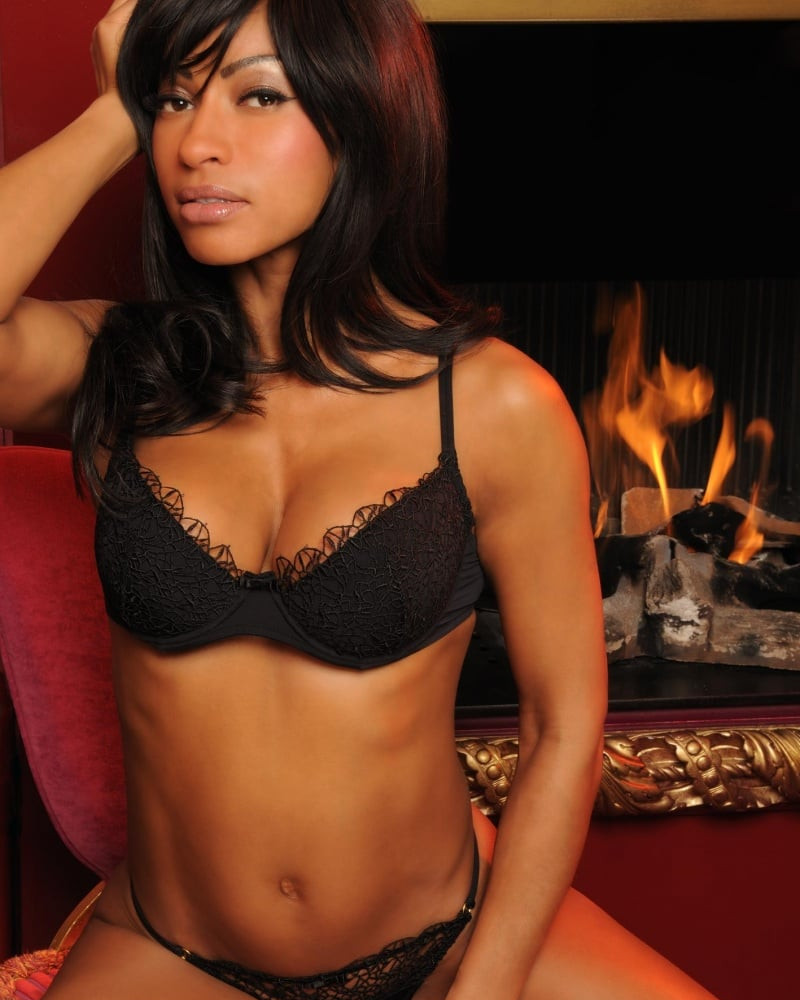
Portraits · 01
Julia Channel spent five years in front of the camera, made about 120 films, won a Hot d'Or, and then walked away to become a television host, a singer and the author of a memoir.
Visit work archivePartner brands

Julia Channel
The person behind the name
Julia Pinel was born in Paris on November 3, 1973, the youngest of five children in a Franco-Malian family. Her father came from Mali, her mother was French, and the first years were spent in a small flat in the 18th arrondissement before the family moved to Neuilly-sur-Marne in Seine-Saint-Denis. She passed the literature baccalauréat, enrolled in philosophy and Italian at the Sorbonne, and paid her way waiting tables. The student years did not last. A camera offered something the lecture hall did not, and she followed it.
Modeling came first. She posed for the swimwear label Oncle Sam and for Playboy and Penthouse, and in July 1992 she answered an advertisement from Clara Casting. A casting with Pierre Woodman followed and she was working at eighteen. Her first credited film, La Baise dans le monde, was shot in February 1993, and over the next five years she appeared in roughly 120 productions. Few French performers of the decade worked at that pace.
The work was European rather than national. She shot in Germany with Nils Molitor, in France for Marc Dorcel, Alain Payet and Michel Ricaud, in the United States for Andrew Blake, and in Italy for Mario Salieri and Joe D'Amato. That spread of directors and markets gave her a filmography unlike the American contract-star model: more languages, more budgets, more styles. No single company owned her image, which made it easier to leave behind.
Her first stage name, Julia Chanel, did not survive a letter from the fashion house. According to her account, Chanel objected to the resemblance and she added a second N. By then she was already crossing into mainstream work: Les Truffes with Jean Reno, Frères, Coup de vice with Samy Naceri, Recto/Verso, and a run of late-night erotic telefilms for M6. These were not cameos. They put her in front of a general audience and kept her there.
She left adult film in 1996 and turned down an offer from Vivid. In interviews she has connected the decision to a Hot Vidéo report on AIDS in Congo and to her own unease about sets where condoms were not routine. What followed was not a retreat. She hosted programmes on MCM, presented Le Journal du hard on Canal+ in 2001, published L'enfer vu du ciel in 2008, released singles and the album Colors in 2013, and started a dating site. She has never treated the adult years as a mistake or a secret, and that refusal to apologise is a large part of why her second career lasted.
Paris before the cameras
Channel's Paris was not the postcard version. She has spoken of a crowded flat in the 18th arrondissement, seven people under one roof, and a move out to the suburbs. Her father came from Mali, her mother was French, and the household held together two worlds that French public life often kept apart. That mixed background later travelled with her image, sometimes as an exotic label, sometimes as a fact she simply refused to explain.
She did well at school, well enough to take the literature baccalauréat and start a degree in philosophy and Italian. The Sorbonne years were short. Modelling brought money and attention, and by the early 1990s she was in magazines and swimwear catalogues. The step from student to model to performer came quickly, but it was not blind: she had already learned how to hold a camera's attention.
The Clara Casting advertisement
The door opened through a small advertisement. Clara Casting was looking for new faces, she answered, and a meeting with Pierre Woodman followed. She was eighteen. Her first film was shot in February 1993, a date that places her at the start of the French industry's most visible international decade.
The early work was fast and cheap. Tapes went out through labels and cinemas already feeling the squeeze from home video, and nobody was waiting for a perfect take. Channel learned on the job: where to stand, when to hold a look, how to stay present through a long day. Those habits later read as poise on television, which is why the adult years look less like a detour and more like an apprenticeship.
A filmography across Europe
Her credits form a rough map of the European business. Nils Molitor in Germany, Marc Dorcel, Alain Payet and Michel Ricaud in France, Andrew Blake in the United States, Mario Salieri and Joe D'Amato in Italy. Each name carried a different visual language, from Dorcel's polished Parisian fantasy to Salieri's Italian melodrama and Blake's glossy, music-video surfaces.
That range is the best argument against pinning her to one persona. She could play the sophisticated Parisienne, the heroine of a story or a model in a stylised vignette, and the thread through all of it was her face and her composure. Directors built scenes around that focus, and she carried it across languages and budgets without dropping it.
The name and the fashion house
The stage name Julia Chanel came from Chanel No. 5, by her own account. The fashion house did not see the tribute. A letter followed, a second N was added, and Julia Channel took its place. The story sounds like a Parisian anecdote, but it says something about visibility: a perfume company could see a commercial risk in a performer's name.
Other names came and went, among them Lydia Chanel and Julia Show. Some were chosen by distributors for different territories, others were simple practicalities in a market that renamed performers as quickly as it reprinted tapes. To a viewer today the aliases look confusing. To a working performer in the 1990s they were part of the job.
Portraits
From film set to television studio
Channel left adult film in 1996, at twenty-two, after five years and around 120 films. She has said that a Hot Vidéo report on AIDS in Congo stayed with her, and that she worried about her own health. The decision was not a breakdown. Mainstream work followed almost at once, including erotic telefilms for M6 and a part in Les Truffes opposite Jean Reno.
Television fitted her. She could talk, she was comfortable live, and she preferred the role of host to the role of object. On MCM she co-presented Zoom Zoom and later fronted Dédicaces; on Canal+ she took over Le Journal du hard in 2001, the first former adult performer to do so. Not everyone approved. She became a familiar face anyway, and the job gave her a platform well outside the adult section of the video shop.
Records, memoir, a family
The 2008 memoir L'enfer vu du ciel turned her experience into a public story and opened the door to music. A single had appeared in 2002; All I Want followed in 2010 as the first taste of an album called Colors. The record finally arrived in 2013, with dance-pop tracks and remixes by Willy William and others. The video for Forever in a Day featured the footballer Didier Drogba.
Music ran alongside other projects. She founded a dating site, Mecacroquer, and kept giving interviews about the past. In February 2013 she had a son, Ayden. Her story is not a clean escape from the industry: she has said she keeps good memories of the performing years even as she built a life away from them. That mixed feeling is what makes her unusual. She never renounced the past. She kept rewriting what it meant.